Tabiya’s 2025 End of Year Reflections
Read on for Tabiya's year in review. We took our open-source tools from pilot to practice across four countries, deepened global partnerships, and launched rigorous evaluations to learn what works. As we look ahead to 2026, we’re building on this momentum to advance inclusive, open-source technology for more efficient and equitable labor markets.
Contributors
Anselme Irumva, Ben Savonen, Christian Meyer, Giulia Moretti


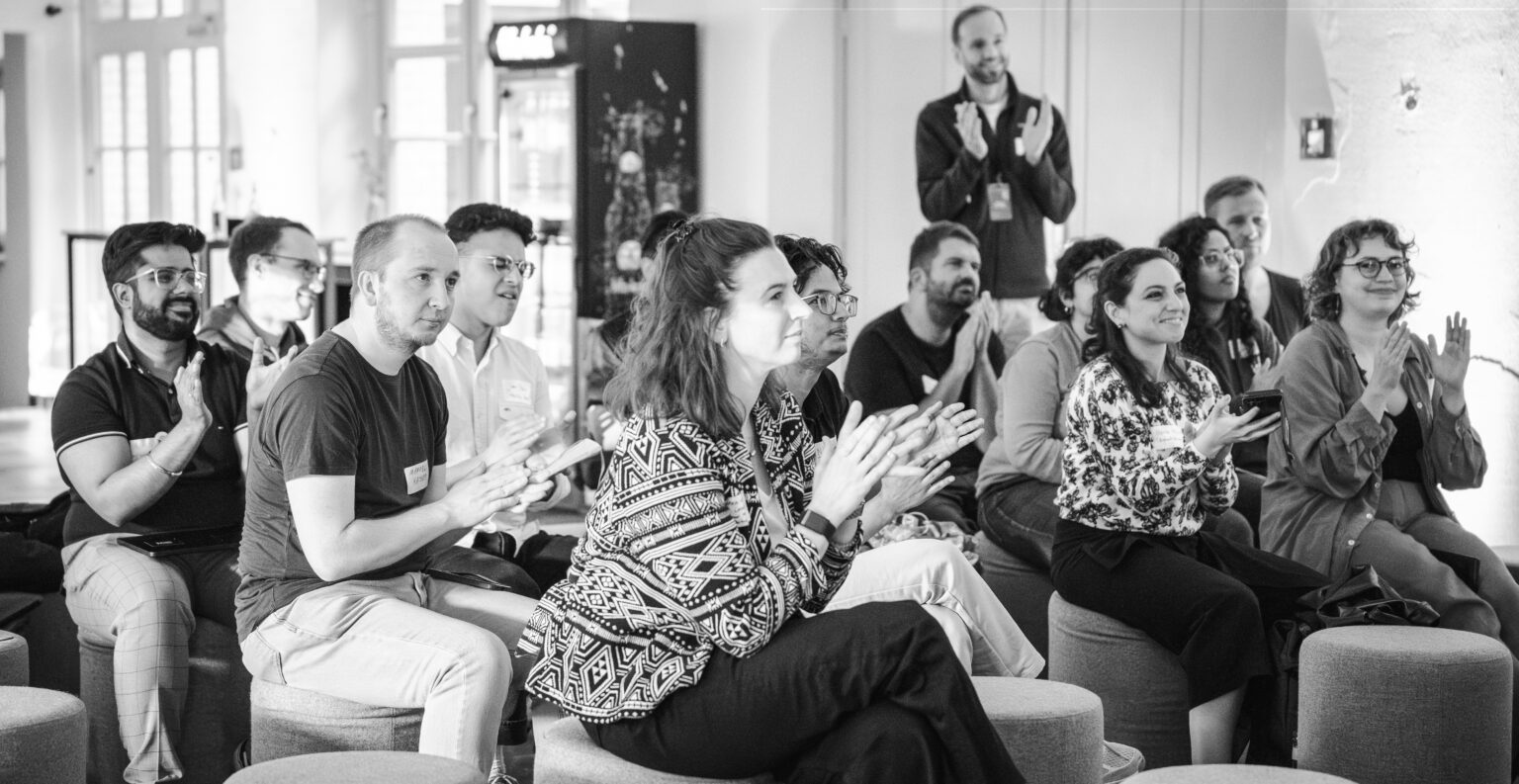
As we close out 2025, we’re filled with gratitude for the partners, funders, and collaborators who have made this year remarkable for Tabiya.
We’re only two years old, and we’re still a little amazed at how far we’ve come. When we started the year, Compass existed mostly in our own testing environments. As we end it, our tools are live with real jobseekers across four countries, we’re running three randomized controlled trials to understand what works, and government partners from Latin America to Eastern Europe are reaching out to explore how open-source infrastructure might serve their youth employment systems. It’s humbling and exciting — and it tells us we’re working on the right problem.
None of this would be possible without our partners. Harambee Youth Employment Accelerator has been with us since the beginning, and this year we deepened that relationship into two rigorous impact evaluations that will shape how we think about inclusive, skills-first hiring and the role that AI can play in skills exploration and career guidance. Fundación Empujar and the World Bank (supported by the Youth Innovation Fund) are bringing Compass to life for Spanish-speaking youth in Buenos Aires, Argentina. Ajira Digital opened doors to Kenya’s employment ecosystem, and Swahilipot Hub and NCCK are helping us explore what forward-looking career guidance can look like in Mombasa, Kenya.
We remain rooted at the University of Oxford, where our research collaborators help us maintain the rigor that makes our evidence meaningful. We’re grateful to the funders who took a chance on infrastructure: Google.org and the Rockefeller Foundation for believing in our vision early and the Patrick J. McGovern Foundation for backing Horizon, our matching layer that will connect the supply and demand sides of the labor market.
Here’s what we built, learned, and are looking forward to.
Building Our Technology
Compass matured significantly this year. We optimized it for both desktop and mobile, and after our first deployment we continuously improved it based on what we learned from real users.
Compass now supports multiple languages. We tested Spanish with Fundación Empujar in Argentina (check out an overview video in Spanish here), and we’ll soon be supporting Kiswahili with Swahilipot Hub in Kenya. We also added CV upload functionality — Compass can now read experiences from uploaded CVs and resumes, reducing the time jobseekers spend entering information. It can also pull data from existing systems like Salesforce via API (instructions here).
On the architecture side, we made a significant investment in modularity. It now takes less than an hour to spin up a new deployment for a partner — complete with their own domain, language settings, and configuration. This is what makes it possible to work with multiple partners across different countries without rebuilding from scratch each time.
Our Inclusive Livelihoods Taxonomy expanded too. We updated occupation labels and added visualizations showing how occupations and skills relate to each other. We explored how international standards like ESCO and ICATUS compare to national taxonomies in South Africa and Argentina. The taxonomy is now available as an API so partners can build on it (instructions here), and we built our Taxonomy Explorer — a tool to visualize and compare taxonomies at explorer.tabiya.org.
The Livelihoods Classifier — our tool for mapping unstructured text to skills and occupations — got its own research paper this year, documenting our model design and evaluation methodology: https://arxiv.org/abs/2512.03195.
Explore our full tech stack at tabiya.org/#technologies.
Learning What Works
Deploying tools is one thing. Understanding whether they help is another.
We’ve built real-time dashboards that give us constant visibility into how people are using our tools, and we’re conducting qualitative research with counselors and jobseekers to understand their experience. But what matters most to us is rigorous counterfactual evidence from randomized controlled trials (RCTs) across different contexts.
This year, with support from Google.org and J-PAL‘s Project on AI and Evidence (PAIE), we launched RCTs in both Kenya and South Africa. In Kenya, we’re partnering with Swahilipot Hub and NCCK to test whether AI-assisted career guidance improves outcomes for young jobseekers in Mombasa. In South Africa, we’re running two trials with Harambee Youth Employment Accelerator and SAYouth.mobi: one testing Compass as a tool for skills exploration, and one evaluating our inclusive skills taxonomy’s effect on hiring outcomes. Running parallel evaluations across contexts will help us understand what works where — and why.
We’re documenting what we’re learning about evaluating AI in the social sector in our blog series: Compass Evaluation – Part 1: Model Evaluation. Stay tuned for first results in early 2026.
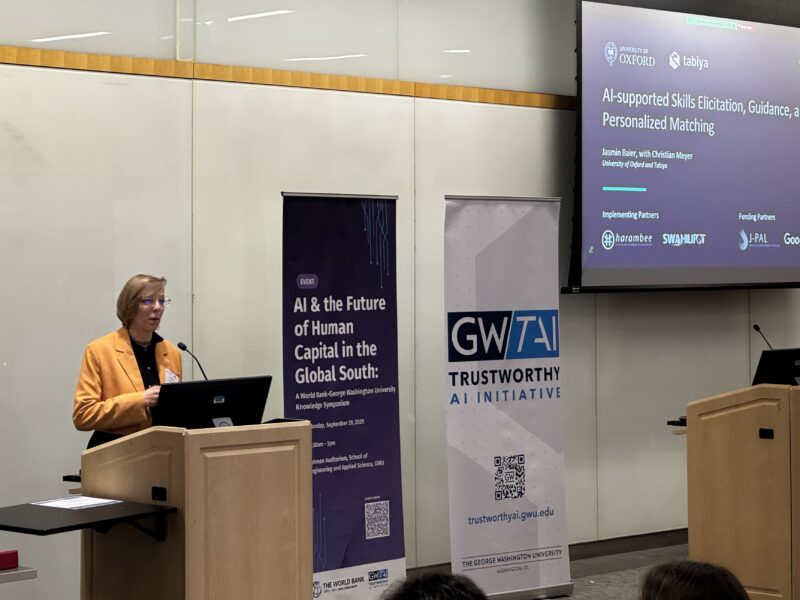
Jasmin from the University of Oxford presenting ongoing randomized controlled trials at the World Bank-George Washington University Knowledge Symposium on AI & the Future of Human Capital in the Global South.
Partnerships and Publications
We’re grateful to have contributed to two World Bank publications this year: a practitioner guide on making job platforms work for women, and a guidance note on digitizing public employment services. Both draw on our experience building open-source tools and highlight how this approach can reduce costs and avoid long-term vendor lock-in. We were also honored to present our work to the World Bank’s community of practice on open-source technology for public employment services.
We’re also excited to be starting a new partnership with the International Growth Centre’s Zambia Evidence Lab. IGC has been a longstanding research partner for our team at the University of Oxford, and we’re working together to develop an AI-supported pipeline that translates interviews with workers and managers into granular data on skills, tasks, and technologies — making it possible to identify current and emerging skill gaps in the Zambian labor market.
And we’re deeply thankful to the Patrick J. McGovern Foundation for backing Horizon, our matching and analytics engine. With their support, we’re building the infrastructure to connect jobseekers with opportunities — and working to make it available in multiple languages, starting with Spanish (learn more in our press release).
Community
In May, we hosted a Tech Deep Dive in Berlin — six speakers from academia, government, and nonprofits sharing practical experience building AI and ML tools for labor markets. It was fantastic to spend time with others working on similar problems, and we came away with new ideas and connections.
We also supported the Code2Unlock hackathon in Kigali. The challenges were built around our taxonomy and Compass, and the winning team created a Tabiya Dataset Explorer. It’s a thrill to see what people build with our tools.
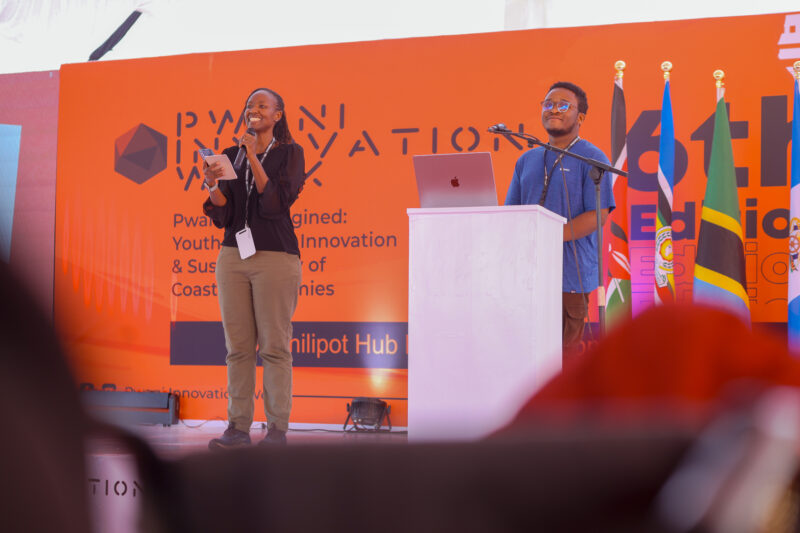
Nyambura, Director of Technology and Community Impact, and Anselme, our Lead Developer, delivering a workshop titled “AI agents for everyone” at Pwani Innovation Week 2025.
Our Growing Team
From our roots at the University of Oxford, our global team spans ten countries across four continents, and experts across a variety of fields – including labor economics, computer science and engineering, product development, and global development.
This year we expanded our engineering and linguistic capacity, which is what’s made it possible to bring our tools from Sub-Saharan Africa to Latin America and beyond. We’re proud of what this team has built together.
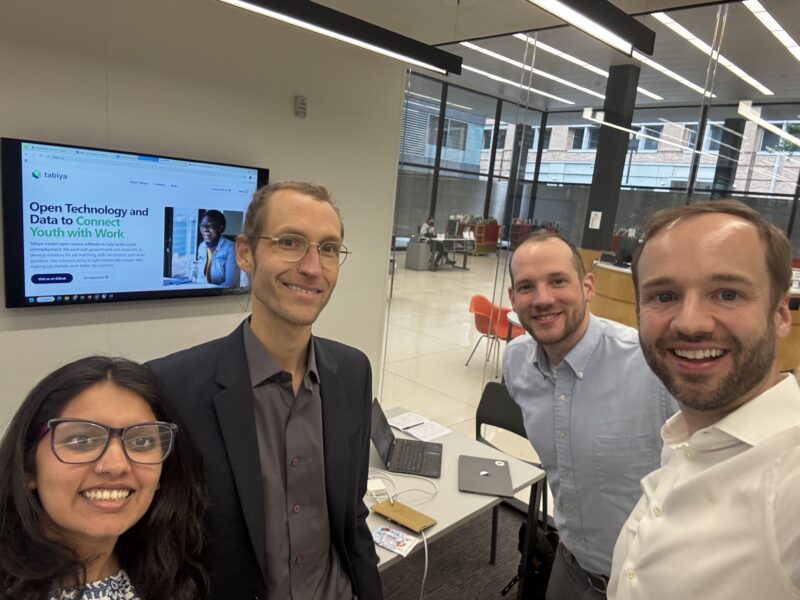
Some of our Tabiya team gathering in Washington, D.C., for a hybrid Strategy Retreat focused on vision and product architecture.
Looking Ahead to 2026
In 2026, we’ll see results from our South Africa and Kenya trials — evidence that will shape how we and our partners think about skills-first hiring and how AI can be deployed responsibly in labor markets. We’re also excited to launch Horizon, completing a critical piece of our platform.
We’ll continue expanding in Latin America, building on the progress we made this year, and we’re planning convenings to bring together the practitioners, researchers, and policymakers working on these challenges — so we can learn from each other.
Two years in, we’re just getting started. Thank you for being part of this journey.
Join Us
We believe in the power of collaboration to create more inclusive and efficient labor markets worldwide. If you’re interested in supporting or implementing Compass, or if you’d like to learn more about our work, contact us or follow us on LinkedIn.