Co-creating open labor market infrastructure with Ethiopia’s government
Ethiopia is building a national public employment service: a network of Job Centers and a digital backbone, the E-LMIS. Tabiya is proud to serve as the technology and thought partner, building the open-source occupational taxonomy and matching engine the system runs on.
Contributors
Afsana Khan, Abiy Samuel, Minaz Singh


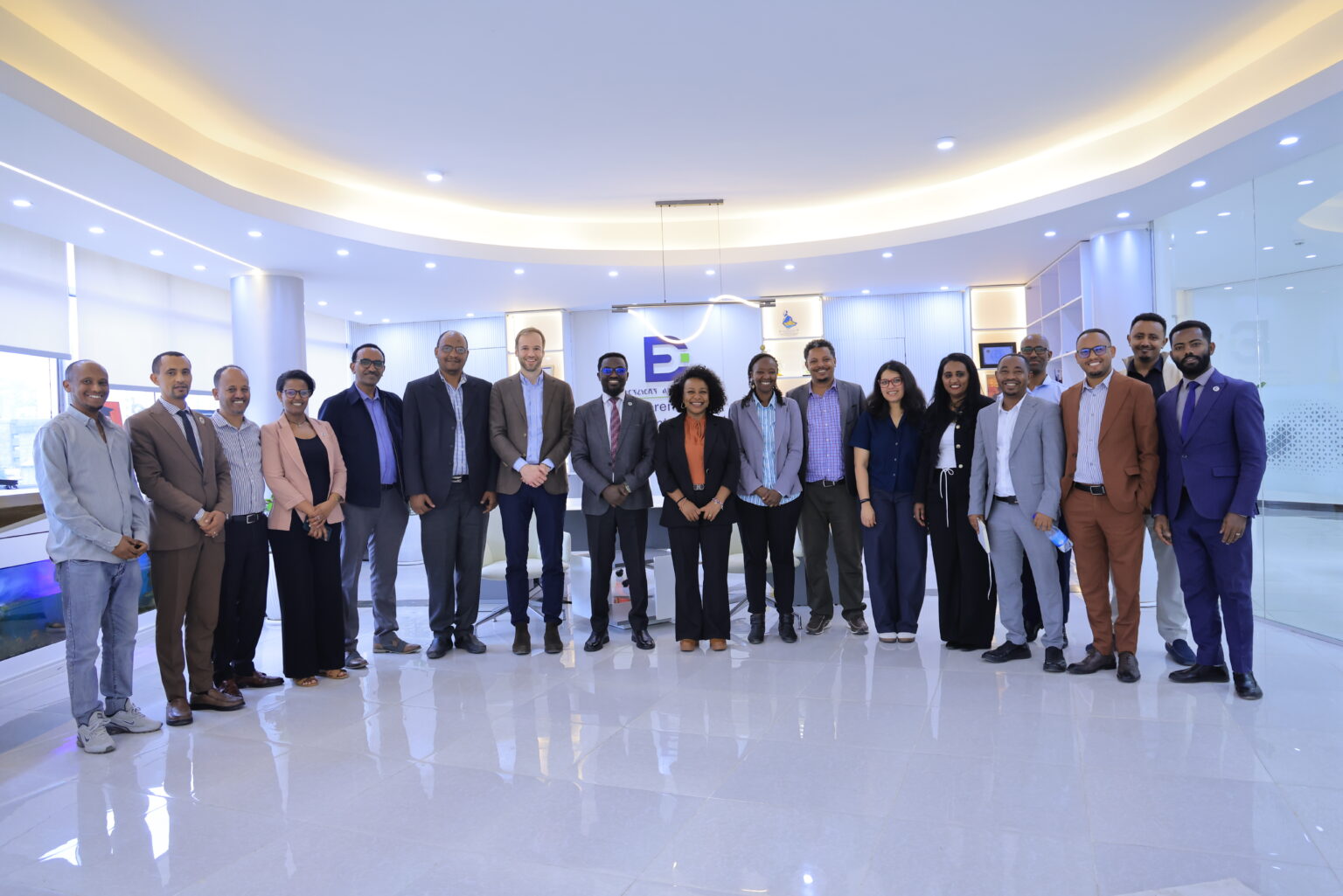
Jobs are scarce in Ethiopia’s cities. Urban youth unemployment reached 27.2 percent in 2022, and the rate for young women was roughly twice that for young men. When work is this scarce, it matters all the more that the few jobs available reach the people who need them. Yet information about opportunities is fragmented, job search is costly, and the people with the fewest connections are the least likely to hear about an opportunity in time.
Public employment services exist to close that gap. They gather and organize vacancies, offer guidance and referrals, record the skills of the people who register, and connect them to employers. Online job platforms do this too, but they tend to reach people who are already well equipped: those with smartphones, higher education, and the confidence to navigate digital interfaces. A public service, delivered locally and embedded in government, can reach the people who lack them. Strengthening it is not only about making the market more efficient; it is also about making it more inclusive. In a citywide randomized trial with the public employment services in Addis Ababa, part of a broader body of research on labor market information frictions in Ethiopia supported by the International Growth Centre, the largest gains went to those with the least opportunities to begin with: women with relatively less formal education.
Ethiopia’s Urban Productive Safety Net and Jobs Project
The Ethiopian government is building this support infrastructure at scale. The Urban Productive Safety Net and Jobs Project (UPSNJP), financed by the World Bank and led by the Ministry of Urban Development and Infrastructure, supports the urban poor and the labor market inclusion of disadvantaged urban youth across 88 cities, reaching roughly 1.7 million people. Within it sits Ethiopia’s emerging public employment service, with a mandate of serving the entire population of about 120 million people through two channels: a network of physical Job Centers, and a national digital backbone, the Ethiopian Labour Market Information System (E-LMIS), led by the Ministry of Labor and Skills (MoLS).
Tabiya is proud to serve as the technology and thought partner in this work, alongside the World Bank and the Ethiopian Entrepreneurship Development Institute (EDI). We support the redesign of the workflows and operating procedures for the Job Centers managed by MoLS, and we build the open-source tools the system runs on: a shared “language” for describing jobs and skills, known as an occupational taxonomy, and the skills-based matching technology that connects people to opportunities. The taxonomy has two roles: It powers matching, and it standardizes Ethiopia’s labor market data at the source. That allows data to add up to a timely picture of labor supply and demand that the government can draw on for planning and policy. For Tabiya, this is an important route to impact in its own right. Governments cannot plan for a labor market they cannot see.
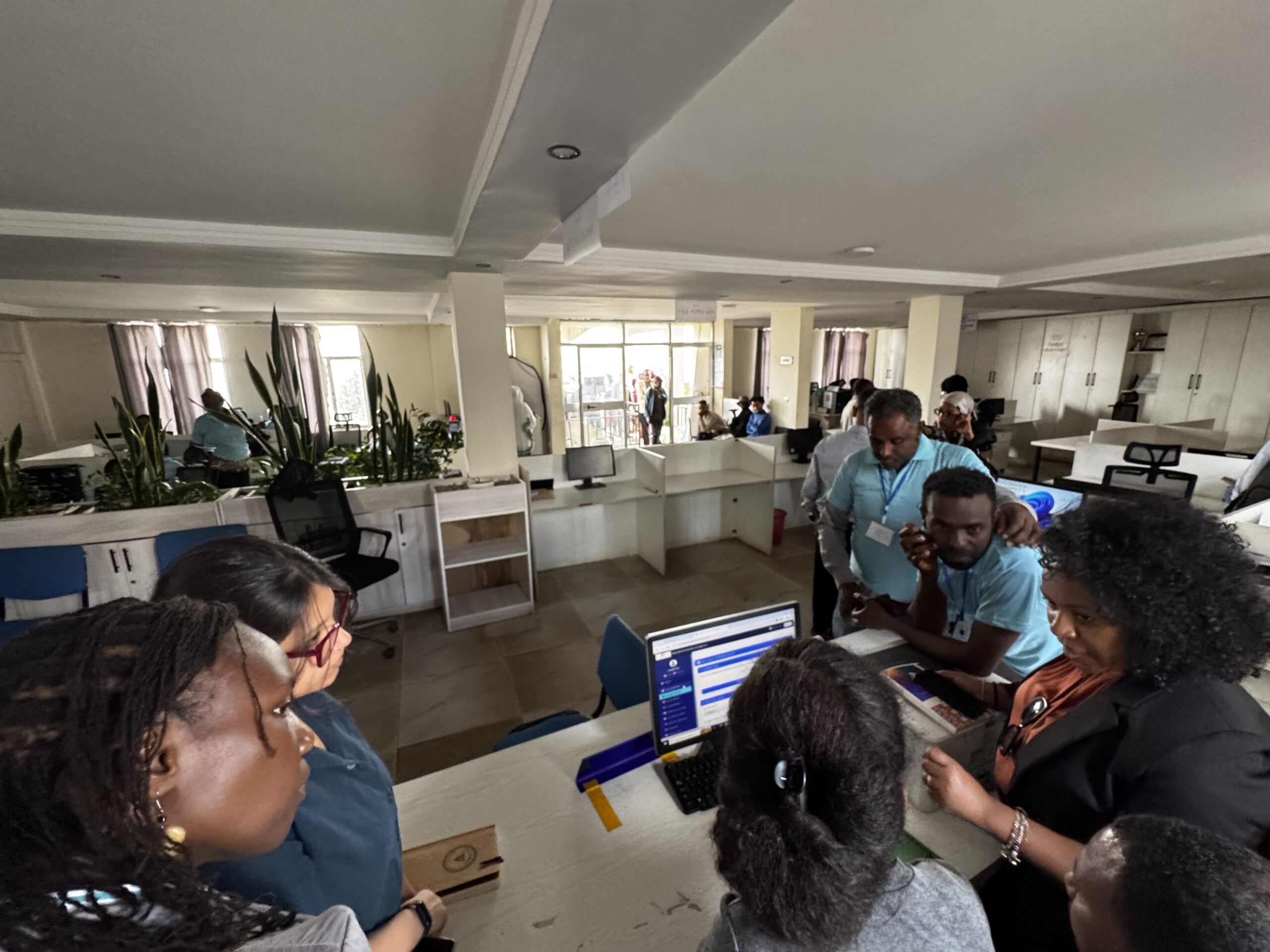
The Tabiya team and World Bank colleagues visiting a pilot Job Center in Addis Ababa
Matching, in plain terms
A job seeker in Addis Ababa might describe their experience in Amharic, in informal terms, drawing on work that never carried a formal title. An employer posts a vacancy in an entirely different, more formal vocabulary. Good matching has to recognize that the two describe the same world. Working with the E-LMIS team at MoLS, and building on our experience in South Africa and Kenya, we turned roughly 131,000 raw, free-text job titles into a standardized catalog of about 9,000 occupations, mapped to international standards (ISCO/ILO) and enriched with local and Amharic labels: a living, openly accessible taxonomy for Ethiopia. We have also shared our open-source “Horizon” matching engine with the E-LMIS team, whose engineers are integrating it into their new system. We are grateful to the Patrick J. McGovern Foundation, whose support made Horizon’s development possible.
Two milestones: Tabiya’s agreements with EDI and with the Ministry of Labor and Skills
This spring, we formalized both partnerships with Memoranda of Understanding. In April, we signed with EDI to support the service model and the operating guidelines that shape how job seekers are registered, assessed, counseled, and matched. In May, we signed with the Ministry of Labor and Skills’ E-LMIS team, covering the taxonomy and matching engine at the heart of the platform, along with a shared roadmap for what comes next. The first Job Center pilot built on this work went live in June 2026.
We are grateful for the spirit of both partnerships. As Brook Teferi, the E-LMIS Chief Product Officer, put it, the goal is “a system that doesn’t just match keywords — it understands the nuances of the Ethiopian professional landscape.”
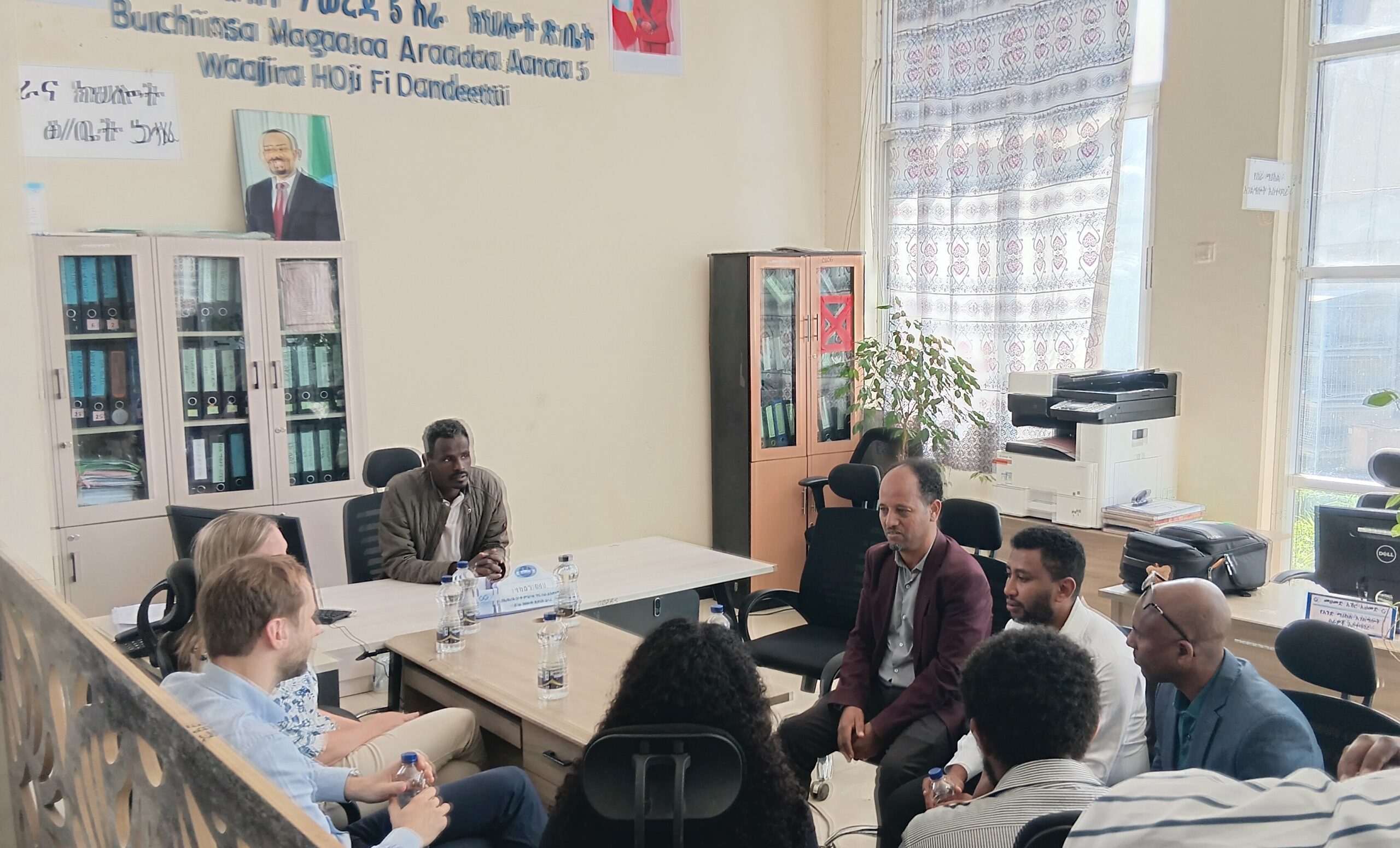
The Tabiya and World Bank teams speaking with our Government of Ethiopia partners at a pilot Job Center.
Beyond the pilot: from matching to analytics and AI-enabled service delivery
This pilot marks the start of a long-term partnership with the Government of Ethiopia. Together with the Ministry, we are exploring how the same data and tools might do more over time: turning the country’s newly standardized labor market data into timely insights for planning and policy; offering career guidance in natural conversation, so a job seeker’s account of their experience is not lost in translation; and giving workers a trusted, portable record of their skills, including the informal work that so often goes unrecognized.
This reflects how Tabiya works: everything we build is open-source and designed for partners to deploy and run themselves, so the system stays in Ethiopian hands. Our most advanced features currently rely on frontier AI models accessed through external APIs. We are working with the government to replace them with locally-run open-weight models, in line with the government’s own direction for the system.
Ethiopia’s team shares the vision behind this work: public infrastructure built as a digital public good, open, shared, and freely reusable. We hope our collaboration can inform the work of other governments across the region.
This work also builds on a longer collaboration in Ethiopia with HahuJobs, the country’s largest digital jobs platform, with whom we first worked to organize and digitize vacancy information in Addis Ababa. And we are particularly grateful to the World Bank for bringing us in and helping hold the collaboration together. Most of all, we are excited about what it is for: a public employment service that reaches the people who need it most, and a labor market a little more inclusive than the one we found.
Our engagement with the Government of Ethiopia is made possible by the generous support of the Laidir Foundation.